
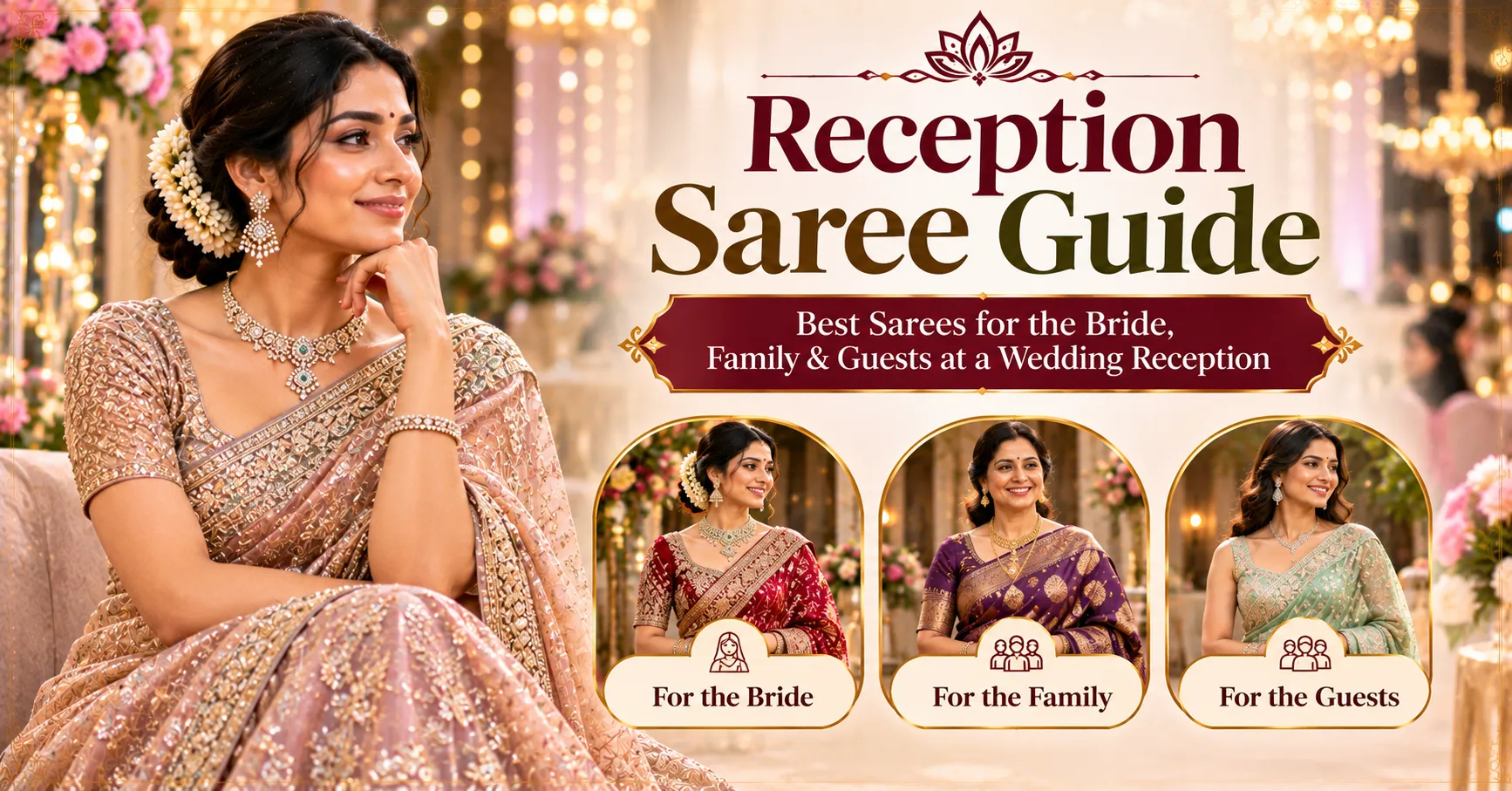
Reception Saree Guide: Best Sarees for the Bride, Family & Guests at a Wedding Reception
The rituals are over. The pheras are done, the vidaai tears have dried, and for the first time the couple greets everyone as husband and wife. The reception is a different kind of celebration from the wedding itself: it’s in the evening, it’s under bright lights, there’s a stage, and there will be hundreds of photographs.
That changes what works. The heavy ceremonial saree that was perfect for the mandap can feel too much for four hours of standing and smiling on stage, and the colours that glow in daylight can look flat under spotlights.
This guide covers what to wear to a reception whether you’re the bride, a mother or sister of the couple, or a guest — with colours, handloom picks, draping styles, blouses, jewellery and budgets.
Reception Saree for the Bride
For most brides, the reception is the chance to show a second side: if the wedding look was traditional, the reception look can be more modern, lighter, or simply a different colour.
Make it different from your wedding saree
- Change the colour. If you married in red, try royal blue, wine, emerald, gold, or a soft pastel for the reception. The two looks will feel distinct in your album.
- Go lighter. You’ll be standing for hours greeting guests. A slightly lighter saree than your wedding one is far easier to carry through the evening.
- Modernise the styling. A statement blouse, a different drape, and lighter jewellery make the same bride look completely new.
Best handloom sarees for a reception bride
- Tissue or jewel-tone Banarasi: gold and silver zari catch stage lights beautifully. Our guides to the beauty of Banarasi sarees and choosing the right Banarasi will help you pick the weight and zari you want, and our zari guide explains what you’re paying for.
- A non-red Paithani: a Paithani in peacock blue, purple, or emerald, with its gold peacock pallu, is regal without repeating the wedding look. The warm sunset tone of an Aboli Paithani is especially lovely under evening lights.
- Zari Chanderi silk: the lightest option, perfect for pastel looks and for brides who want to move freely. See our Chanderi colour guide.
A note on tradition: in some communities, the reception look follows custom. At the Bengali Bou Bhat, hosted by the groom’s family after the wedding, the bride traditionally wears a red Benarasi that the groom’s family gives her. Our guide to regional bridal sarees covers more customs. If your family has a tradition, start there.
Bride’s reception checklist
- Saree pre-pleated and the pallu pinned, ideally by someone experienced
- Blouse trial done at least a week before
- Comfortable footwear — you’ll stand for hours
- Spare safety pins and fashion tape in a small pouch
- Lighter jewellery than your wedding set
- A shawl or cape if the venue is outdoors in winter
- Someone to arrange your pallu before photos
Reception Colour Guide
Reception colours need to look good under artificial light and in photographs. These work well:
| Colour | Mood | Best For | Handloom Pick |
| Royal blue & navy | Regal, modern | Bride, mothers | Banarasi with gold or silver zari |
| Wine & burgundy | Rich, romantic | Bride, sisters, guests | Banarasi or Paithani |
| Emerald & bottle green | Festive, elegant | Everyone | Paithani or Maheshwari silk |
| Gold & champagne | Glamorous; glows on stage | Bride | Tissue Banarasi |
| Silver & ice grey | Cool, contemporary | Bride, younger guests | Silver-zari Chanderi |
| Pastels (blush, lilac, mint) | Soft, fresh | Bride, sisters | Chanderi silk |
| Red & maroon | Traditional | Bride; traditional receptions | Red Banarasi |
| Black | Bold, fashion-forward | Guests (check with the family) | Black Chanderi or Banarasi with gold |
Some traditional families avoid black or all-white at weddings, so ask if you’re unsure. For more on colour, see our Maheshwari colour guide.
For the Mother and Sisters of the Bride or Groom
Mothers
At the reception, the mothers are hosts: greeting guests, introducing relatives, and on stage for family photos. Their saree should look rich and dignified, and be easy to manage all evening.
- Weaves: Banarasi silk, Paithani or Maheshwari silk with a generous zari border.
- Colours: navy, emerald, wine, mustard-gold or deep purple. Avoid the bride’s exact colour. Some families like the two mothers to coordinate — a lovely touch in group photos.
- Drape: a classic Nivi drape with the pallu pleated and pinned stays neat while moving around.
Sisters and bridesmaids
- Lighter silks such as Tussar or Chanderi are comfortable for dancing and running errands.
- A shared colour palette (for example, all in jewel tones, or all in pastels) looks beautiful in photos without everyone matching exactly.
- Modern blouses and an open-pallu drape suit the younger mood of the evening.
For Guests: Dress Up Without Outshining the Couple
- Check the invitation. Some receptions have a dress code or colour theme.
- Avoid the bride’s colour if you know it, and skip full bridal red-and-gold.
- Choose jewel tones with metallic accents rather than head-to-toe shimmer.
- Pick one statement piece — a bold blouse, heavy earrings, or a rich border — not all three.
- Good handloom choices: Chanderi silk, Maheshwari silk, Tussar, or a lighter Banarasi. For a Bengali reception, a fine Jamdani is a graceful option.
Gifting the bride a saree for her new wardrobe? Our saree gift guide has ideas by budget.
Reception Draping Styles
- Classic Nivi with a pleated pallu: neat and photo-safe. The best choice for heavy silks and for mothers who will be busy hosting.
- Open pallu: the pallu flows loose over one arm — dramatic on stage. It needs a lighter saree and very secure pinning at the shoulder.
- Bengali drape: for Bengali brides and family; the pallu comes over both shoulders for a traditional look.
- Belted drape: a saree belt holds the pleats and pallu in place — modern and practical if you plan to dance.
- Pre-draped saree: ideal for guests who don’t drape often or want to dance freely.
Our draping guide covers the Nivi drape step by step, and our saree accessories guide shows where every pin should go.
Blouse, Jewellery & Hair for the Reception
- Blouse: the reception is the moment for a statement blouse — a deep back with tassels, a boat neck, a sweetheart neckline, or cape sleeves. For winter receptions, choose velvet or full sleeves. Browse our 2026 blouse designs and match the fabric with our blouse fabric guide.
- Jewellery: brides can swap the heavy wedding set for one statement piece, such as a choker or a long polki necklace. Mothers usually suit traditional gold. Guests should keep to heavy earrings or a necklace, not both.
- Hair: soft waves, a sleek low bun with flowers, or a braided bun. If you’re wearing a statement necklace or a deep-back blouse, keep your hair up so they show.
Reception Sarees by Budget
| Budget | Handloom Picks | Best For |
| Under ₹5,000 | Chanderi silk, Maheshwari silk, Tussar silk | Guests, sisters, cousins |
| ₹5,000–₹15,000 | Lighter Banarasi, Paithani, richer Tussar | Mothers, close family, the bride’s second look |
| Above ₹15,000 | Real-zari Banarasi, Paithani with a full peacock pallu | The bride; mothers buying an heirloom |
Prices vary with fabric, zari, and weaving time. See our handloom saree price guide for realistic benchmarks.
Find Your Reception Saree at Shashikala
Whether you’re the bride, the hosts, or a guest, explore our Banarasi, Paithani, Chanderi, Maheshwari, and Jamdani collections — every saree handwoven, with full transparency on fabric, zari, and origin. Planning the rest of the wedding? Our saree guides for every wedding function, engagement, and roka cover every look.
Explore our reception-ready handloom collection at ShashikalaSarees.com
FAQ’s
Q1: What saree should a bride wear for her reception?
Many brides choose a saree that contrasts with their wedding look — a different colour such as royal blue, wine, emerald, gold, or a pastel, and often a lighter weight for comfort during hours on stage. Tissue or jewel-tone Banarasi, a non-red Paithani, and zari Chanderi silk are all excellent handloom choices. Some communities follow tradition instead; at a Bengali Bou Bhat, for example, the bride traditionally wears a red Benarasi.
Q2: Should the reception saree be different from the wedding saree?
It doesn’t have to be, but most brides prefer it. A different colour, lighter fabric, and a more modern blouse and drape give you two distinct looks in your photographs, and a lighter saree is easier to manage through a long evening.
Q3: What colour saree is best for a wedding reception?
Colours that look good under evening lights work best: royal blue, wine, emerald, gold, champagne, and silver. Pastels suit brides and sisters who want a softer look. Guests should avoid the bride’s colour and, in traditional families, black or all-white.
Q4: What should the mother of the bride wear to the reception?
A rich, dignified silk such as Banarasi, Paithani, or Maheshwari in a jewel tone like navy, emerald, wine, or deep purple, draped in a neat Nivi style with the pallu pinned. She should avoid the bride’s exact colour; some families coordinate both mothers’ colours for photos.
Q5: What should guests avoid wearing to a reception?
Avoid the bride’s colour, full bridal red-and-gold, and outfits that are more embellished than the bride’s. In traditional families, black and all-white are best avoided unless the hosts say otherwise. Check the invitation for a dress code.

About author



Add comment