
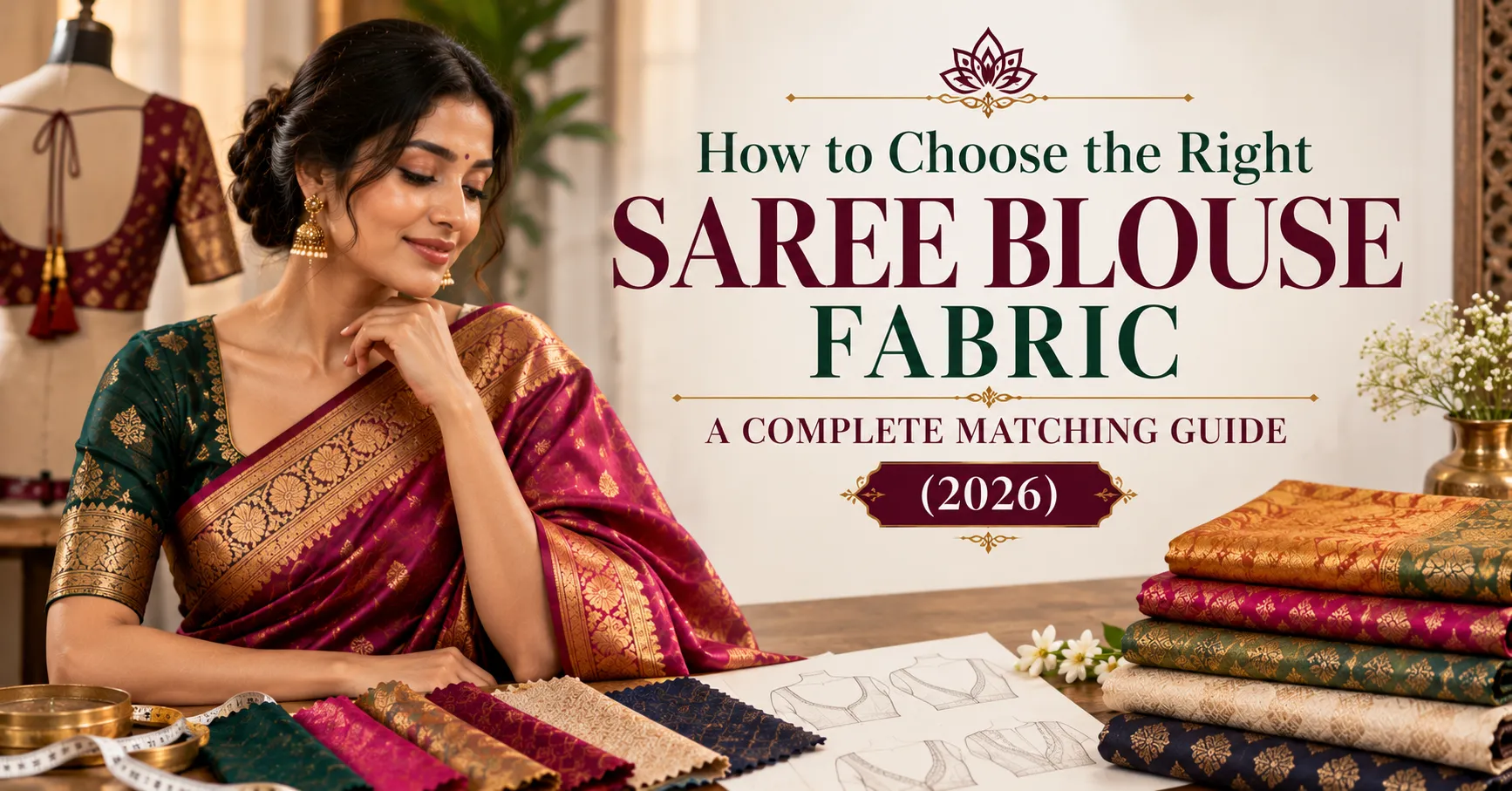
How to Choose the Right Saree Blouse Fabric – A Complete Matching Guide (2026)
You’ve chosen the perfect saree. The colour is right, the drape is gorgeous, the occasion is set. Then you reach the tailor with the blouse fabric, and everything falls apart — because the fabric you picked doesn’t match the saree’s weight, texture, or season.
Here’s what most saree guides miss: the blouse fabric matters as much as the blouse design. A stunning deep-back blouse in the wrong fabric will itch, stiffen, or look mismatched. A simple round-neck blouse in the perfect fabric will feel effortless and photograph beautifully.
This guide helps you match the right blouse fabric to your saree type, season, and occasion. For blouse style and neckline inspiration, pair this with our 2026 blouse design guide.
Blouse Fabric Guide by Saree Type
The golden rule: match the weight and texture of the blouse fabric to the saree. A heavy saree with a light blouse looks unfinished. A light saree with a stiff blouse feels awkward. Here’s the detailed breakdown:
- Heavy Silk Sarees (Banarasi, Paithani, Kanchipuram)
These are your densest, heaviest handlooms. The blouse must hold its own against the saree’s weight and richness without competing with it.
- Best blouse fabrics: Raw silk, Dupion silk, brocade (for contrast blouses), matching silk from the saree’s own blouse piece
- Why these work: Raw silk has enough body and structure to balance heavy zari. Brocade adds texture without over-embellishing. The attached blouse piece ensures perfect colour and texture continuity.
- Avoid: Cotton (too casual for the saree’s weight), georgette (too flimsy), net (won’t support the drape). See our Banarasi saree buying guide and Paithani guide for specific blouse pairing advice.
- Lightweight Silk Sarees (Chanderi, Tussar, Maheshwari)
These sarees have a delicate, semi-sheer quality. The blouse should complement their lightness, not overpower it.
- Best blouse fabrics: Soft silk, cotton-silk blend, raw silk (lighter weight), art silk for budget options
- Why these work: Soft silk matches Chanderi’s sheer elegance. Cotton-silk creates a comfortable daily-wear pairing with Maheshwari. Tussar silk pairs best with its own blouse piece or raw silk in a complementary tone.
- Avoid: Heavy brocade (overwhelms the saree), velvet (too heavy), stiff satin (wrong texture)
- Cotton Handloom Sarees (Mangalagiri, Ikat, Ajrakh, South Indian Cotton)
Cotton sarees demand breathable, grounded blouse fabrics that honour the handloom’s natural character.
- Best blouse fabrics: Cotton (matching or contrast), handloom cotton, cotton-silk blend for a subtle upgrade
- Why these work: Cotton-on-cotton feels honest, comfortable, and seasonally perfect. A Mangalagiri cotton saree with a contrast cotton blouse is the quintessential everyday handloom look. For Ikat sarees, a plain cotton blouse in a complementary colour lets the ikat pattern be the hero.
- Avoid: Silk, satin, velvet, or any heavily embellished fabric — they clash with cotton’s understated texture
- Sheer & Lightweight Sarees (Chiffon, Georgette, Organza)
These fluid, transparent sarees require blouse fabrics that are smooth, structured enough to anchor the drape, but not stiff.
- Best blouse fabrics: Crepe, satin (butter satin, not stiff satin), soft silk, lace, net (for layered looks)
- Why these work: Crepe has a smooth, non-slip surface that keeps the pallu in place. Satin adds a touch of sheen that complements georgette’s flow. Lace and net create elegant transparency matching the saree’s mood.
- Avoid: Cotton (too matte and flat), brocade (too heavy), raw silk (too textured)
Quick Blouse Fabric Picker Table
| Your Saree Type | Best Blouse Fabric | Also Works | Avoid |
| Banarasi / Paithani / Kanchipuram | Raw silk, Dupion silk | Brocade (contrast), attached blouse piece | Cotton, georgette, net |
| Chanderi / Tussar / Maheshwari | Soft silk, Cotton-silk blend | Raw silk (light), art silk | Heavy brocade, velvet, stiff satin |
| Mangalagiri / Ikat / Ajrakh | Cotton, Handloom cotton | Cotton-silk blend for upgrade | Silk, satin, velvet, heavy embellish |
| Chiffon / Georgette / Organza | Crepe, Butter satin | Soft silk, Lace, Net | Cotton, brocade, raw silk |
| Jamdani / Muslin | Soft cotton, Cotton-silk | Soft silk for festive | Heavy or stiff fabrics |
Best Blouse Fabrics for Different Seasons
- Summer (Mar–Jun): Cotton is king. For silk sarees in summer, choose raw silk (lighter weave) or cotton-silk blend over pure silk. Avoid velvet, heavy brocade, and satin — they trap heat and cause discomfort during long events.
- Monsoon (Jul–Sep): Cotton and crepe dry fastest. Avoid pure silk blouses in monsoon — water stains silk and humidity makes it cling uncomfortably. Synthetic blends (polyester-cotton) are practical for commuting in rain.
- Winter (Oct–Feb): This is the season for velvet, heavy brocade, and rich Dupion silk blouses. Velvet adds warmth and photographs beautifully under winter evening lighting. Brocade with zari or sequin work creates festive grandeur. Pair these with your premium Banarasi and Paithani silks.
Contrast vs Matching Blouse Fabric – Design Rules
This is the most common dilemma at the tailor’s shop. Here’s when each approach works best:
- Matching (same fabric, same colour): Creates a unified, traditional, elongating look. Best for formal occasions, bridal sarees, and heavy silk sarees where you want the saree to be the sole focus. Use the attached blouse piece whenever possible.
- Contrast colour, same fabric weight: The safest contrast approach. Pick a blouse colour that matches the saree’s border or pallu. Same-weight fabric ensures visual balance. This is the most popular choice for festive wear.
- Contrast fabric: Bold and fashion-forward. A brocade blouse with a plain silk saree, a velvet blouse with a chiffon saree, or a raw silk blouse with a light Chanderi. The key rule: one hero, one support. If the saree is loud, the blouse stays simple. If the saree is plain, the blouse can make the statement.
For more contrast and design inspiration, explore our Chanderi saree colour guide and Maheshwari saree colour guide.
5 Common Blouse Fabric Mistakes That Ruin a Saree Look
- Pairing a cotton blouse with a heavy silk saree: The weight mismatch makes the blouse look cheap against the saree’s richness. Raw silk or Dupion is the minimum for heavy silk sarees.
- Using stiff satin with a flowing saree: Stiff satin creates a box-like blouse shape that fights the saree’s natural drape. Use butter satin or crepe instead for smooth, fluid sarees.
- Velvet in summer: Velvet is heavy, warm, and traps sweat. Wearing it in May or June will make you miserable. Reserve velvet strictly for October–February.
- Ignoring the attached blouse piece: Most handloom sarees come with a matching blouse piece specifically chosen for that fabric. Using it guarantees perfect colour and texture match. Many women skip it in favour of a contrast — which is fine, but don’t discard the original; it’s always the safest option.
- Choosing a blouse fabric without trying it against the saree: Always drape the blouse fabric over the saree before buying. Colours look different on screen, in tube light, and in natural light. What looks matching in the shop may clash in daylight. Take the saree with you when buying blouse fabric.
Found Your Blouse Fabric? Now Find the Perfect Saree
The right blouse fabric is the finishing touch that makes a saree look complete. Whether you’re pairing cotton with your everyday Mangalagiri, raw silk with a festive Chanderi, or brocade with a bridal Banarasi — getting this match right transforms your entire look. For draping techniques that complement your blouse-saree combination, see our complete draping guide. And for office-ready handloom picks that pair beautifully with simple cotton blouses, explore our workwear collection.
➤ Explore our handloom saree collection at ShashikalaSarees.com
FAQ’s
Q1: Which blouse fabric is best for a Banarasi saree?
Raw silk or Dupion silk is the best blouse fabric for a Banarasi saree. These fabrics have enough body and structure to match the Banarasi’s weight and richness. Brocade is an excellent choice for contrast blouses. The attached blouse piece that comes with the saree is always the safest option for a perfectly coordinated look.
Q2: Can I wear a cotton blouse with a silk saree?
It’s generally not recommended. Cotton looks too casual against the richness of silk and creates a visual weight mismatch. For lightweight silks like Chanderi or Tussar, a cotton-silk blend blouse is a workable compromise. For heavy silks like Banarasi or Kanchipuram, stick to raw silk, Dupion, or brocade.
Q3: What blouse fabric should I wear in summer?
Cotton is the most comfortable blouse fabric for summer. For silk sarees in hot weather, choose a lighter-weight raw silk or cotton-silk blend rather than heavy Dupion or brocade. Avoid velvet, heavy satin, and thick brocade in summer — they trap heat and cause discomfort during long events.
Q4: What blouse fabric works with a Chanderi saree?
Soft silk or cotton-silk blend blouses work best with Chanderi’s semi-sheer, lightweight texture. For a festive look, use the attached blouse piece or a soft art silk in a complementary colour. Avoid heavy brocade or velvet, which would overpower Chanderi’s delicate drape.
Q5: Should I always use the blouse piece that comes with the saree?
Not always, but it’s the safest option. The attached blouse piece is specifically chosen to match the saree’s colour, texture, and weight perfectly. If you want a contrast blouse, keep the original piece as a backup and choose a contrast fabric of equal weight. Always drape the new fabric against the saree in natural light before purchasing.
────────────────────────


About author

Add comment