
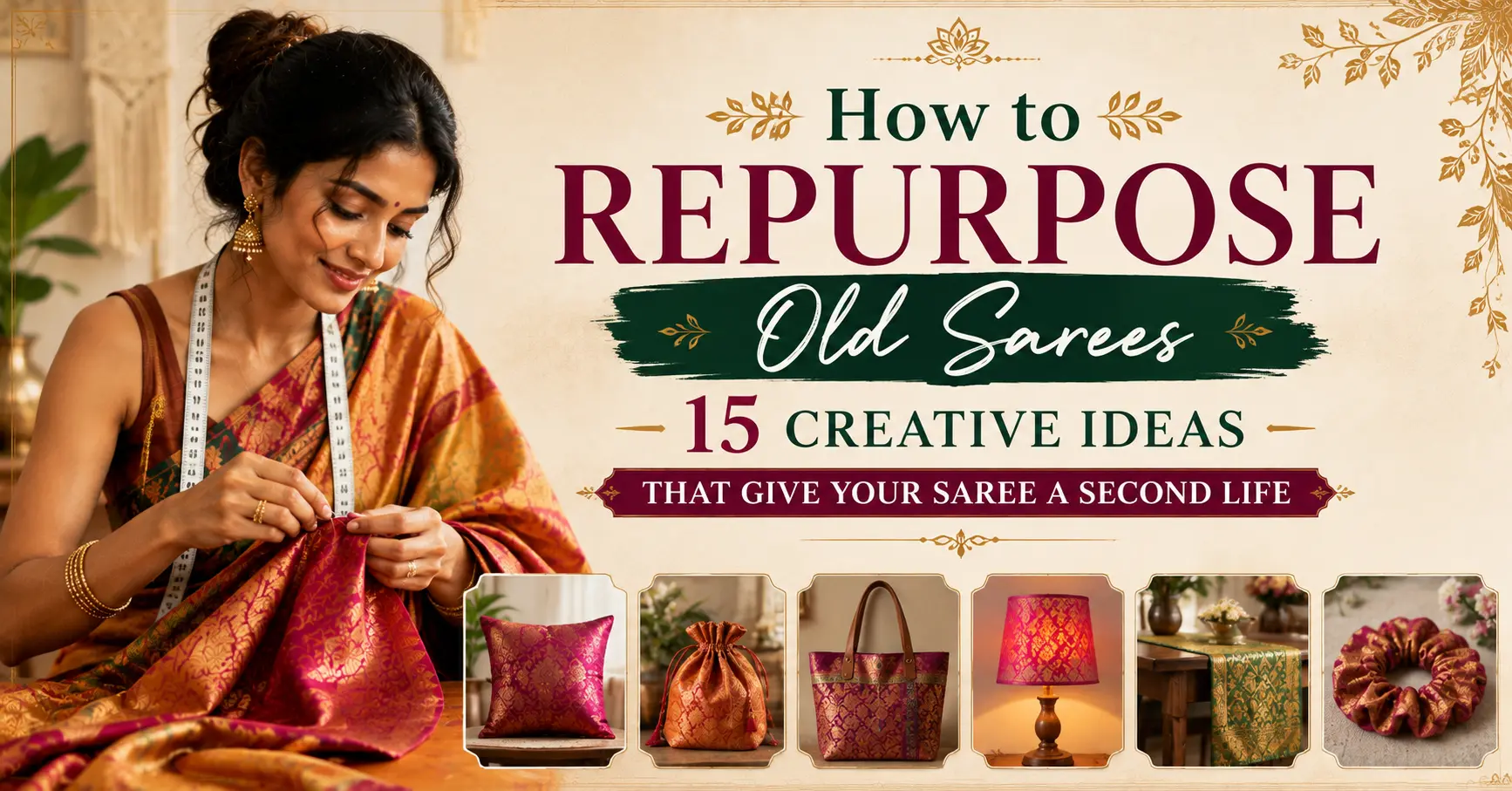
How to Repurpose Old Sarees – 15 Creative Ideas That Give Your Saree a Second Life
Somewhere in your wardrobe, there’s a saree that hasn’t been worn in years. Maybe the colour has faded. Maybe the style feels dated. Maybe it was your mother’s or grandmother’s — too precious to wear, too precious to throw away.
Here’s the truth: a saree’s life doesn’t have to end when you stop draping it. The fabric, the motifs, the zari, the pallu — all of it can be transformed into something new, beautiful, and useful. And when you repurpose a handloom saree, you’re not discarding it. You’re honouring it — by giving those threads another story to tell.
These 15 ideas range from simple no-sew projects to tailor-assisted transformations. We’ve organised them into four categories: wearable upcycles, home décor, accessories, and sentimental keepsakes.
Wearable Upcycles – From Saree to Outfit
- Anarkali Dress or Kurta
A silk or cotton saree can be transformed into a flowing Anarkali dress or a structured kurta. The pallu’s intricate design becomes the yoke or hemline detail, giving the new garment a built-in designer touch. This is one of the most popular upcycles and works with almost any fabric.
Difficulty: Medium (tailor needed) | Best fabric: Silk, cotton, georgette
- Wrap Skirt or Maxi Skirt
The simplest wearable upcycle. A saree’s natural length and drape make it perfect for a flowing wrap skirt — you barely need to cut anything. Use the border as the hemline and the pallu as a decorative sash. Pair with a plain top for an effortlessly stylish fusion outfit.
Difficulty: Easy | Best fabric: Cotton, chiffon, georgette
- Dupatta or Stole
Cut and hem a section of the saree (ideally including one border) to create an elegant dupatta or stole. This is a no-brainer for sarees where only the body has faded but the borders and pallu are still gorgeous. Add tassels or lace trim for a festive touch.
Difficulty: Easy | Best fabric: Chanderi, chiffon, Banarasi
- Lehenga or Lehenga Choli
Old Banarasi and Paithani sarees convert beautifully into lehenga sets. The heavy zari work and rich silk create a bridal-quality lehenga without the bridal price tag. A skilled tailor can use the pallu as the dupatta and the body as the skirt — zero waste.
Difficulty: Advanced (experienced tailor needed) | Best fabric: Heavy silk with zari
Home Décor Upcycles – Cushion Covers, Curtains & Wall Art
- Cushion Covers
This is the easiest and most impactful home décor upcycle. Cut saree panels into cushion-sized squares, add a lining, and insert a zipper. The zari borders and rich colours of silk sarees create cushion covers that look designer. Mix-and-match different saree fabrics for a bohemian-luxe effect.
Difficulty: Easy | Best fabric: Silk, Banarasi, Ikat
- Table Runner or Dining Set
The border section of a saree is the perfect width and design for an elegant table runner. Use the pallu as a centrepiece mat. For cotton sarees, you can also make matching napkins and placemats — a complete dining set from a single old saree.
Difficulty: Easy | Best fabric: Cotton, silk-cotton blend
- Curtains or Window Panels
Sheer cotton and chiffon sarees make beautiful window panels that filter light with a warm, colourful glow. Use two matching sarees for a full curtain set. The effect is stunning — especially with hand-block-printed cotton or old Ajrakh sarees in indigo and rust.
Difficulty: Easy | Best fabric: Cotton, chiffon, Ajrakh
- Framed Textile Wall Art
Stretch the pallu section of an old silk saree over a canvas frame and hang it as wall art. The intricate weaving, zari patterns, and rich colours of a Banarasi or Paithani pallu make stunning focal pieces for living rooms, bedrooms, or pooja rooms. This is the perfect solution for heirloom sarees that are too damaged to wear but too beautiful to discard.
Difficulty: Easy | Best fabric: Banarasi, Paithani, heavy silk
Accessory Upcycles – Bags, Scarves & Hair Accessories
- Potli Bag or Clutch
The pallu or border of a silk saree makes gorgeous potli bags and clutches for weddings and festive events. Add a drawstring, a lining, and a tassel — you’ve got a designer-quality accessory from a saree that was sitting unused. These also make exceptional handmade gifts.
Difficulty: Medium | Best fabric: Silk, Banarasi, brocade
- Tote Bag or Everyday Bag
Cotton and silk-cotton sarees can be stitched into sturdy, beautiful tote bags. Use the border as the bag’s top trim and the body as the main panel. Line with canvas or cotton lining for structure. These make excellent eco-friendly shopping bags and daily carry bags.
Difficulty: Medium | Best fabric: Cotton, Mangalagiri, Ikat
- Hair Accessories – Scrunchies, Headbands & Bows
The easiest small-project upcycle. Silk and cotton scraps from any saree can become beautiful scrunchies, padded headbands, and hair bows in minutes. These make adorable gifts, especially when made from a grandmother’s or mother’s saree — a wearable memory.
Difficulty: Easy (DIY at home) | Best fabric: Any saree fabric
- Scarf or Neck Wrap
Cut a section of sheer silk or Chanderi saree into a rectangular scarf. The natural sheen of silk makes a stunning lightweight neck wrap for travel, office, or evening wear. You can also stitch multiple saree scraps together for a patchwork scarf with a unique story in every panel.
Difficulty: Easy | Best fabric: Chanderi, chiffon, silk
Sentimental Upcycles – Honouring Heirloom Sarees
- Memory Quilt or Patchwork Blanket
This is the most emotionally meaningful upcycle. Collect panels from multiple family sarees — your grandmother’s, your mother’s, your wedding saree — and stitch them into a patchwork quilt. Every patch tells a story. Every seam connects generations. It becomes a family heirloom in a completely new form.
Difficulty: Advanced (quilter or experienced tailor) | Best fabric: Cotton, silk — mix and match
- Baby Blanket or Cradle Liner
Soft cotton sarees are gentle on baby skin and make beautiful, breathable baby blankets. Line with muslin for extra softness. A baby blanket made from a grandmother’s saree is one of the most meaningful gifts a new mother can receive — wrapping the next generation in family history.
Difficulty: Easy | Best fabric: Soft cotton, muslin, old Mangalagiri
- Framed Saree with Story Card
For sarees that are truly irreplaceable — a bridal saree, a late mother’s favourite, an antique handloom — consider professional framing. Mount the pallu or a key section in a shadow box frame with a small handwritten card noting its story: who wore it, when, and why it matters. It transforms a saree from a garment into a family artifact.
Difficulty: Easy (professional framing recommended) | Best fabric: Any precious heirloom saree
When to Repurpose vs When to Restore
Before you cut into an old saree, ask yourself: is it worth restoring instead?
- Restore if: The saree is a genuine handloom in good structural condition with only minor damage (small stain, loose thread, faded section). A professional textile restorer can often revive a handloom saree to near-original condition. Premium silks like Banarasi and Paithani are almost always worth restoring rather than cutting.
- Repurpose if: The saree has irreparable damage (large tears, permanent stains, moth holes), is a machine-made piece with limited resale value, or is structurally sound but you’ll never wear it as a saree again. Our handloom vs machine-made saree guide can help you determine if your old saree is genuine handloom.
For sarees you’re keeping as sarees, proper storage makes all the difference. Our handloom saree care and storage guide covers everything you need to prevent future damage.
And When You’re Ready for a New One…
Repurposing an old saree isn’t an ending — it’s a transition. The threads continue in a new form. The colours live on in your home, your wardrobe, your children’s blankets.
And when you’re ready to start the cycle again with a new handloom saree that’s built to last generations, explore our artisan-made collection. Every Shashikala saree is handwoven from natural fibres — the kind of fabric that ages gracefully, drapes better with time, and one day becomes the perfect material for your grandchild’s memory quilt. Browse our trending handloom collection to find your next heirloom.
Shop authentic handloom sarees at ShashikalaSarees.com
FAQ’s
Q1: Can all old sarees be repurposed?
Yes. Silk, cotton, chiffon, georgette, and blended sarees can all be upcycled. The project depends on the fabric condition: intact sarees work for garments and home décor, while damaged sarees are perfect for smaller items like cushion covers, bags, scrunchies, and patchwork quilts.
Q2: What is the easiest way to repurpose an old saree?
Cushion covers, scarves, and hair scrunchies are the easiest projects — they require minimal cutting and basic stitching. A wrap skirt is the easiest wearable upcycle because the saree’s natural length and drape do most of the work.
Q3: Should I repurpose or restore an old handloom saree?
If the saree is a genuine handloom (Banarasi, Paithani, Kanchipuram) in good structural condition, restoration is usually the better choice — these sarees have lasting value. Repurpose if the damage is irreparable or if the saree is machine-made with limited resale value.
Q4: What can I make from an old Banarasi saree?
Old Banarasi sarees convert beautifully into lehenga sets, cushion covers, potli bags, framed textile wall art, and memory quilts. The heavy silk and intricate zari work give any upcycled product a premium, designer-quality look.
Q5: Is saree upcycling sustainable?
Absolutely. India’s textile industry generates millions of tonnes of fabric waste annually. By repurposing sarees instead of discarding them, you reduce textile waste, extend the life of natural fibres, and honour the craftsmanship that went into making them. Handloom sarees are especially worth upcycling because the natural fibres and real zari are of far higher quality than mass-produced alternatives.


About author

Add comment