
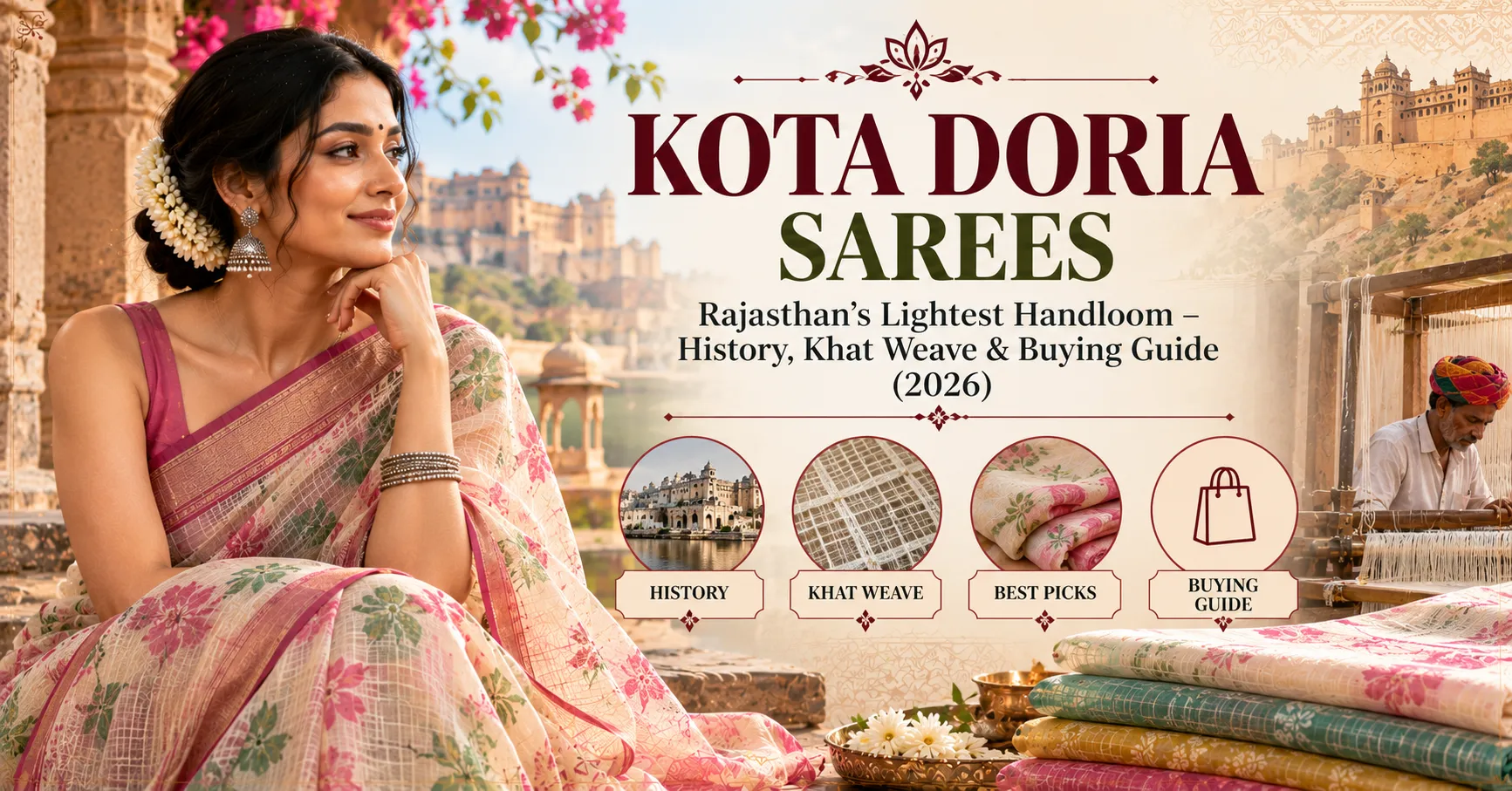
Kota Doria Sarees: Rajasthan’s Lightest Handloom – History, Khat Weave & Buying Guide (2026)
QUICK FACTS
- Also called: Kota Masuria, Kota Doriya
- Main weaving hub: Kaithoon, about 15 km from Kota; smaller clusters around Baran and Bundi
- Signature feature: The khat — a fine square-check grid woven into the fabric
- Fibres: A blend of fine cotton (strength) and silk (sheen); also pure cotton and pure silk versions
- Loom: Traditional pit loom
- GI Status: GI-tagged in 2005 — among the first GI tags awarded in Rajasthan
- Price range: About ₹2,500 (plain handloom) to ₹25,000+ (real zari, pure silk)
Hold a Kota Doria saree up to the light and you’ll see something remarkable: a grid of tiny, translucent squares running across the entire fabric, each one barely bigger than a grain of rice. That grid is the khat, and it is the reason Kota Doria is one of the lightest, airiest sarees ever woven in India.
For women who live through 45°C summers, Kota Doria isn’t a luxury — it’s survival with style. It drapes crisply, lets air pass straight through, and somehow looks formal enough for an office meeting and festive enough for a daytime celebration.
This guide covers where Kota Doria comes from, how the khat weave works, the different types, how it compares to Chanderi, how to spot a genuine handloom piece, and what you should pay in 2026.
The Story of Kota Doria – From Mysore to Rajasthan
Kota Doria’s roots, surprisingly, lie in the south. According to the most widely told history, master weavers from the Mysore region were brought to the Kota area in the late 17th century by Rao Kishore Singh, a general in the Mughal army. The weavers were known as “Masuria” (from Mysore), which is why the fabric was long called Kota Masuria.
Over the next two centuries the craft took root in the Hadoti region of south-eastern Rajasthan, especially in the village of Kaithoon, where pit looms became a fixture in thousands of homes. Today much of the weaving is carried out by women in these households, keeping a 300-year-old skill alive.
The word doria is generally linked to dori (thread) — fitting for a fabric defined by the precise arrangement of its threads.
What Is the Khat? How Kota Doria Is Woven
Kota Doria’s magic lies in its structure, not in surface decoration:
- Strengthening the yarn: Before weaving, the warp is coated with a thin rice paste (known locally as maandi) mixed with juice from wild onions. This traditional sizing makes the delicate threads strong enough for the loom, so the finished fabric needs little extra finishing.
- Combining cotton and silk: Fine cotton and silk threads are arranged together in both warp and weft. Cotton gives the fabric crispness and strength; silk adds lustre and translucency.
- Forming the khat: The alternating cotton and silk threads, woven at precisely controlled tension, create the square checks. Because silk and cotton behave differently, the weaver must adjust tension by hand to keep the checks even — a skill machines struggle to copy.
- Weaving on a pit loom: The weaver sits with her legs in a pit below the loom, controlling the shuttle and treadles by hand and foot. A plain saree may take several days; a zari-bordered piece can take weeks.
This grid structure is what makes Kota Doria a true open weave — and why it feels so different from smooth, fine-woven handlooms like Chanderi or Maheshwari.
Types of Kota Doria Sarees
| Type | What Makes It Different | Best For |
| Cotton-silk Kota (classic) | The traditional blend; crisp body with soft sheen | Office, daytime events, everyday summer wear |
| Pure cotton Kota | Matte, very breathable, slightly more structured | Daily wear, peak summer, travel |
| Pure silk Kota | Lustrous, softer drape, more expensive | Festive mornings, summer weddings |
| Zari Kota | Zari borders, butis or checks woven in | Weddings, Teej, Gangaur, celebrations |
| Embellished Kota | Block print, tie-dye, gota patti or embroidery added on top | Contemporary and festive styling |
Embellished Kota is where Rajasthan’s crafts meet — a Kota base with Bandhani tie-dye or hand-block printing is a beautiful festive option.
Kota Doria vs Chanderi – How Do They Compare?
Both are sheer, lightweight cotton-silk handlooms, and they’re often confused online. Here’s how to tell them apart:
| Parameter | Kota Doria | Chanderi |
| Origin | Kota region, Rajasthan | Chanderi, Madhya Pradesh |
| Weave | Open weave with visible khat (check) grid | Fine, smooth plain weave |
| Feel | Crisp, airy, slightly textured | Soft, smooth, gentle sheen |
| Transparency | Very sheer; grid visible in light | Sheer but even, no grid |
| Typical motifs | Checks, zari borders, small butis | Coin butis, floral motifs, zari borders |
| Drape | Structured; holds pleats well | Fluid; falls softly |
| Best for | Hot, dry summers; office wear | Semi-formal and festive events |
| GI tag | Yes | Yes |
If you love Chanderi’s softness, read our Chanderi colour guide. If you want maximum airflow, Kota Doria wins. For a full fabric-by-season breakdown, see our seasonal saree fabric guide.
How to Identify Authentic Kota Doria Handloom
Powerloom imitations — often made outside Rajasthan — are common. Use these checks:
- Look for the GI mark: Genuine Kota Doria is GI-protected. Many authentic pieces carry the Kota Doria GI logo, often woven into a corner of the saree. Ask the seller for GI documentation.
- Study the khat: On a handloom piece, the checks are fine and crisp, with the cotton and silk threads clearly balanced. Powerloom copies often have larger, flatter checks or a printed grid that sits on the surface.
- Check the edges: Handloom selvedge is slightly rough and irregular. Powerloom edges are perfectly smooth and machine-finished.
- Feel the fabric: Real Kota Doria has a distinctive crisp-yet-light hand-feel from the rice-paste sizing and cotton-silk blend. Synthetic imitations feel slippery or plasticky.
- Price reality check: A genuine handloom Kota Doria saree is very unlikely to cost under ₹2,000. Anything far below that is almost certainly powerloom or synthetic.
For the bigger picture, see our guides on identifying genuine handloom sarees, the difference between handloom and machine-made sarees, and India’s GI-tagged sarees.
Kota Doria Saree Price Range in 2026
| Type | Approx. Price | What Drives the Price |
| Powerloom / synthetic imitation | ₹500–₹1,500 | Not handwoven; no GI protection |
| Plain handloom cotton-silk | ₹2,500–₹6,000 | Fineness of khat, yarn quality |
| Handloom with zari border or butis | ₹5,000–₹12,000 | Amount and type of zari, weaving time |
| Pure silk or heavy real-zari Kota | ₹12,000–₹25,000+ | Silk content, real zari, intricate designs |
Prices vary by seller and design. For benchmarks across other handlooms, see our handloom saree price guide.
How to Style Kota Doria for Different Occasions
- Office: A cotton-silk Kota in pastel or earthy tones, a fitted cotton blouse and small studs. Kota holds pleats well, so it stays neat all day. More ideas in our best handloom sarees for office wear.
- Summer daytime events: A zari-bordered Kota in mint, peach or powder blue is ideal for brunches, baby showers and daytime pujas.
- Teej & Gangaur: Choose Kota with Leheriya or Bandhani detailing, paired with gota patti borders and silver jewellery.
- Travel: Pure cotton Kota is light enough to pack easily and cool enough for long journeys.
Getting the basics right:
- Petticoat: Because Kota is sheer, the petticoat must match the saree colour exactly. Our saree accessories guide explains petticoat fabric and colour matching.
- Blouse fabric: Cotton or cotton-silk keeps the look breathable; avoid heavy satin or velvet. See our blouse fabric guide.
- Drape: Kota’s crisp texture suits a neat Nivi drape with sharp pleats. Follow our draping guide for step-by-step help.
Caring for Your Kota Doria Saree
- Dry clean the first time, especially if the saree has zari or deep colours.
- Later, hand wash gently in cold water with mild detergent. Never wring — the open weave can distort.
- Dry in shade, laid flat or loosely draped, to keep the khat grid straight.
- A light starch after washing restores the signature crispness.
- Iron on low heat with a cotton cloth between the iron and the saree, especially over zari.
- Store folded in muslin and refold every few months. Our handloom saree care guide covers long-term storage.
Light, Airy, Artisan-Made – Explore Summer Handlooms at Shashikala
Kota Doria is proof that comfort and craftsmanship can live in the same six yards. If you love airy, breathable handlooms, explore our Chanderi sarees, Mangalagiri cottons and lightweight Maheshwari silks — every piece handwoven, with full transparency on fabric and origin.
Explore our lightweight handloom collection at ShashikalaSarees.com
FAQ’s
Q1: What is a Kota Doria saree?
Kota Doria is a lightweight handwoven saree from the Kota region of Rajasthan, mainly the village of Kaithoon. It is made from a blend of fine cotton and silk and is recognised by its khat — a grid of tiny square checks that makes the fabric sheer and airy. It is GI-tagged.
Q2: Why is Kota Doria also called Kota Masuria?
The weaving tradition is believed to have come from the Mysore region. Weavers brought to Kota in the late 17th century were known as Masuria, so the fabric was long called Kota Masuria.
Q3: What is the difference between Kota Doria and Chanderi?
Kota Doria comes from Rajasthan and has an open weave with a visible check grid (khat), giving it a crisp, airy feel. Chanderi comes from Madhya Pradesh and has a smooth, fine plain weave with a soft sheen and coin-like butis. Kota is more structured; Chanderi drapes more fluidly.
Q4: How can I tell if a Kota Doria saree is genuine?
Look for the Kota Doria GI mark and ask for documentation, check that the khat is fine and woven in (not printed), feel for rough handloom edges rather than smooth machine edges, and be wary of prices far below ₹2,000.
Q5: Is Kota Doria good for summer?
Yes — it is one of the best summer sarees in India. The open khat weave lets air pass through easily, and the cotton-silk blend stays light and crisp even in extreme heat.

About author



Add comment