
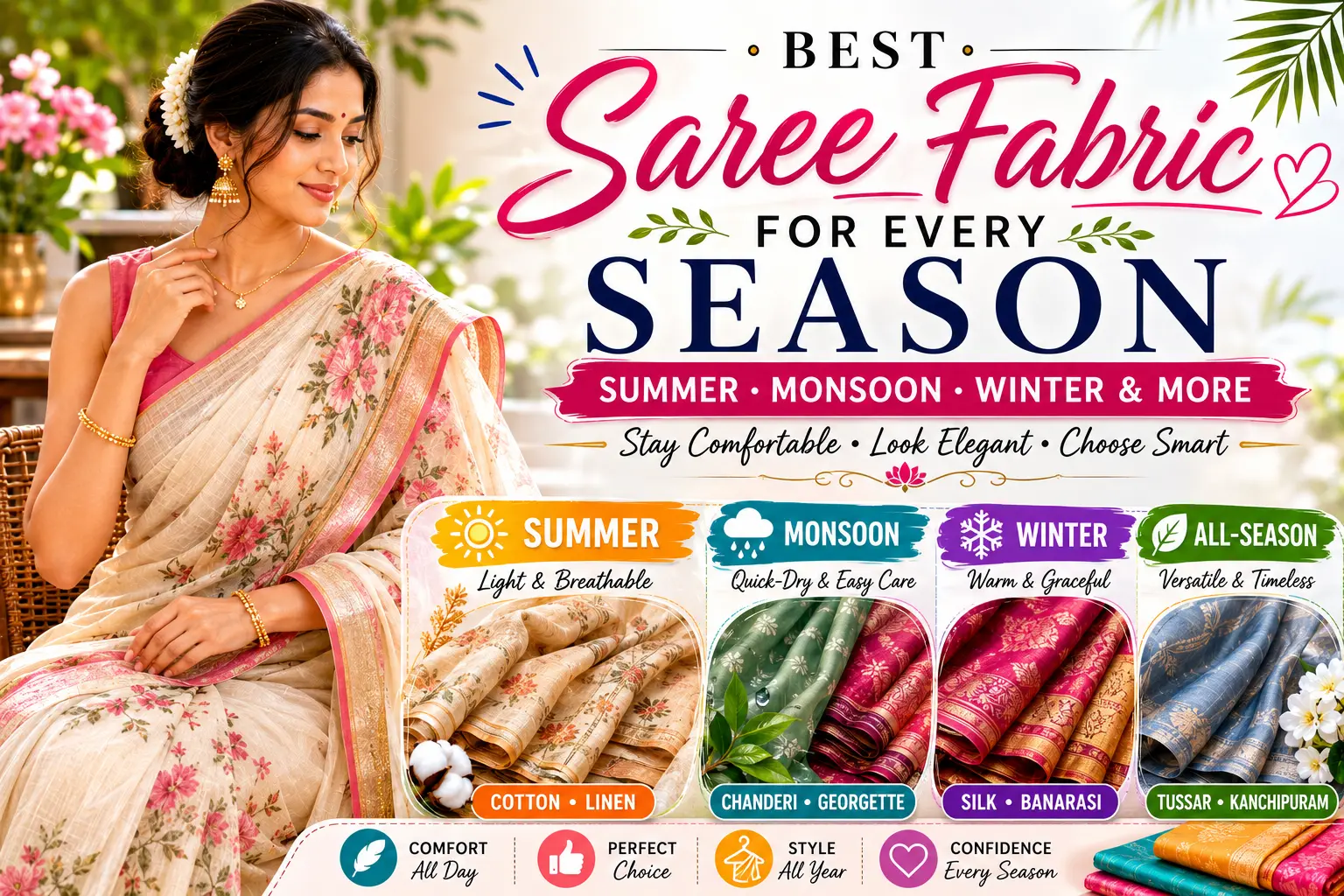
Best Saree Fabric for Every Season – Summer, Monsoon, Winter & More
Most saree buying guides focus on occasion or design. But if you live in India, you already know the truth: the fabric decides your comfort more than the colour ever will. A gorgeous Banarasi silk saree feels divine at a December wedding — and absolutely unbearable in a May heatwave.
Whether you’re building a versatile handloom wardrobe or picking a saree for one specific event, understanding which fabric works in which season will save you from uncomfortable drapes, sweat-soaked blouses, and monsoon mishaps.
This guide covers the best saree fabrics for summer, monsoon, and winter — with practical handloom recommendations you can shop today.
Best Saree Fabrics for Summer (March – June)
Indian summers range from dry heat in Delhi and Rajasthan (40–48°C) to humid coastal heat in Mumbai and Chennai. Either way, you need fabrics that breathe, absorb moisture, and feel light on the body. Here are the best options:
- Mangalagiri Cotton
Mangalagiri cotton sarees are woven from pure cotton in Andhra Pradesh and are among the lightest handloom sarees available. Their crisp texture allows air to circulate freely, making them ideal for office wear, day outings, and casual festive events during peak summer. Pair them with minimal jewellery for a clean, modern draping style.
- Chanderi Cotton-Silk
Chanderi sarees blend cotton and silk to create a fabric that is sheer, lightweight, and carries a subtle sheen. They work beautifully for summer weddings and formal daytime events where you want elegance without the weight of pure silk. Consult our Chanderi colour guide to pick the right shade for the occasion.
- Tussar Silk
If you need silk for a summer wedding, Tussar silk is your best bet. Unlike heavier Banarasi or Kanchipuram silks, Tussar has a naturally breathable, textured weave that doesn’t trap heat. Its golden, earthy sheen looks stunning in natural light — making it a favourite for daytime ceremonies.
- Linen & Linen-Cotton Blends
Linen sarees are crisp, dry quickly, and get softer with every wash. They are excellent for travel, daily wear, and casual outings. The only downside is that linen wrinkles easily, but many wearers consider that part of its charm.
💡 Summer Tip: Avoid heavy silk sarees (Banarasi, Kanchipuram) in peak summer. Reserve them for winter weddings when the weight and warmth actually feel comfortable. Read our Banarasi saree buying guide to understand silk weight grades.
Best Saree Fabrics for Monsoon / Rainy Season (July – September)
Monsoon is the trickiest season for saree wearers. High humidity, unexpected downpours, and muddy splashes mean you need fabrics that dry fast, resist staining, and don’t become heavy when damp.
- Cotton Handlooms in Dark Colours
The same cotton handlooms that work in summer — Mangalagiri and lightweight Ikat cotton — work well in monsoon too, provided you choose darker shades (navy, bottle green, maroon) that hide splashes and stains.
- Georgette & Crepe
These lightweight synthetics dry quickly, drape well even in humidity, and don’t stick to the body. They are practical choices for commuting or attending events during rainy weather.
- What to Avoid in Monsoon
Pure silk sarees (including Banarasi, Paithani, and Kanchipuram) should be avoided during monsoon. Water can permanently stain silk and damage zari work. If you’ve invested in premium handloom silks, our handloom saree care and storage guide explains how to protect them properly during the rainy season.
💡 Monsoon Tip: Keep a cotton dupatta or stole in your bag as a quick-dry pallu protector when stepping outdoors.
Best Saree Fabrics for Winter & Festive Season (October – February)
Winter is when heavy, luxurious handloom sarees truly come into their own. The cooler temperatures make dense silk weaves comfortable instead of suffocating — and this season also overlaps with India’s biggest wedding and festival months.
- Banarasi Silk
Winter is the season for Banarasi sarees. The dense silk-and-zari weave provides natural insulation while delivering unmatched bridal grandeur. Jewel tones like deep maroon, emerald, and royal blue look their richest under winter evening lighting.
- Paithani Silk
Paithani sarees are a Maharashtrian winter wedding staple. The pure silk body with gold zari pallu offers warmth and weight that drapes elegantly in cooler weather. Explore our top 10 handloom Paithani picks and the timeless Aboli colour Paithani for festive inspiration.
- Maheshwari Silk
Maheshwari silk sarees offer a lighter silk option for mild winters or for women who find heavy Banarasi sarees too dense. The reversible borders and warm colour palette make them versatile for both Diwali evenings and winter brunches.
- Kanchipuram / Kanjeevaram Silk
The heaviest and most opulent of all silk sarees, Kanchipuram is ideal for South Indian winter weddings and temple ceremonies. The thick mulberry silk provides genuine warmth and the broad zari borders make a powerful visual statement.
💡 Winter Tip: This is the best season to invest in premium handloom silk. Check our handloom saree price guide to understand fair pricing before you shop, and learn to identify genuine handloom sarees to avoid machine-made imitations.
Season-Wise Fabric Comparison Table
Use this quick-reference table to match the right fabric to the right season:
| Season | Best Fabrics | Avoid | Best For |
| Summer(Mar–Jun) | Mangalagiri cotton, Chanderi, Tussar silk, Linen | Heavy silk (Banarasi, Kanchipuram), Velvet | Office, daily wear, daytime weddings, travel |
| Monsoon(Jul–Sep) | Dark cotton, Georgette, Crepe, Ikat cotton | Pure silk, Organza, Tissue fabrics | Commute-friendly, casual events, monsoon festivals |
| Winter(Oct–Feb) | Banarasi silk, Paithani, Maheshwari silk, Kanchipuram | Thin cotton, Linen (too cold without layering) | Weddings, Diwali, receptions, festive gatherings |
Quick Tips: How to Match Fabric to Your Climate & Lifestyle
- Dry heat (Delhi, Rajasthan): Pure cotton breathes best. Linen is excellent. Avoid synthetics that trap heat.
- Humid heat (Mumbai, Chennai, Kolkata): Go for Chanderi or Tussar silk — they handle humidity better than pure cotton, which can feel damp and heavy.
- Mild winters (South & West India): Maheshwari silk and lightweight Chanderi silk are ideal. Heavy Banarasi may feel excessive.
- Cold winters (North & Central India): This is Banarasi and Paithani territory. The dense weave provides genuine warmth.
- Daily wear all year: Mangalagiri cotton and Ikat cotton sarees are the most versatile year-round handlooms. See our best handloom sarees for office wear for work-friendly picks.
- Year-round weddings: Check our best traditional sarees for weddings and festivals guide for season-matched wedding picks.
Find Your Perfect Seasonal Saree at Shashikala Sarees
At Shashikala Sarees, our collection is built around India’s finest handloom traditions — from breathable Mangalagiri cottons and elegant Chanderi silks for summer, to luxurious Banarasi and Paithani silks for winter celebrations. Every saree is sourced directly from artisan clusters, with complete transparency on fabric and origin.
Shop season-perfect handloom sarees — curated for India’s climate.
➤ Explore our full handloom collection at ShashikalaSarees.com
FAQ’s
Q1: Which saree fabric is best for summer?
Pure cotton sarees (like Mangalagiri) are the best for summer because they are breathable, lightweight, and absorb moisture. For summer weddings, Tussar silk and Chanderi cotton-silk offer elegance without the heaviness of pure silk.
Q2: Can I wear silk sarees in the monsoon?
It is best to avoid pure silk sarees during monsoon. Water can permanently stain silk and damage zari work. If you must wear silk, opt for silk-blend sarees and keep your saree protected from direct rain.
Q3: What is the best saree fabric for winter weddings?
Banarasi silk, Paithani silk, and Kanchipuram silk are ideal for winter weddings. Their dense weave provides natural warmth, and the rich zari work looks stunning under winter evening lighting. Jewel tones like maroon, emerald, and navy are the most popular choices.
Q4: Which handloom saree can I wear all year round?
Mangalagiri cotton and Ikat cotton sarees are the most versatile year-round handlooms. They are lightweight enough for summer, practical for monsoon (in dark colours), and can be layered with a shawl or jacket for mild winters.
Q5: How do I store seasonal sarees when not in use?
Wrap silk sarees in soft muslin cloth, store in a cool dry place, and refold every few months to prevent permanent crease lines. Avoid plastic covers as they trap moisture. For a complete guide, read our handloom saree care and storage post on the Shashikala Sarees blog.
EXTERNAL LINKS TO ADD (Open in New Tab)
- Indian Institute of Handloom Technology — https://handlooms.nic.in
- Bureau of Indian Standards Textile Norms — https://www.bis.gov.in


About author



Add comment