
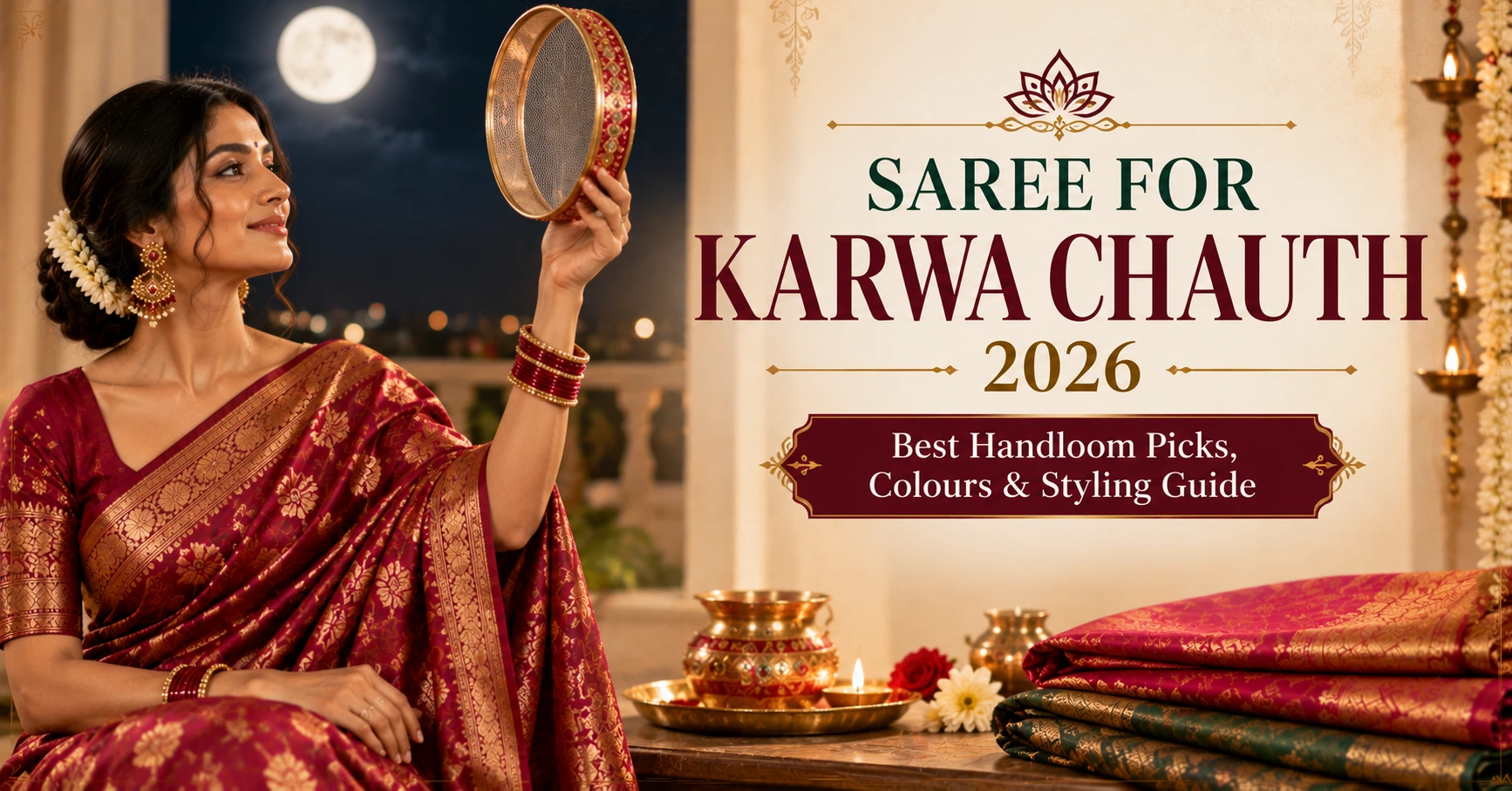
Saree for Karwa Chauth 2026: Best Handloom Picks, Colours and Styling Guide
Karwa Chauth 2026 falls on Thursday, 29 October, with moonrise expected around 8:15–8:35 PM IST depending on your city. That means a nirjala (waterless) fast lasting roughly 14 hours — from the pre-dawn sargi until the moon finally appears in the evening sky.
Fourteen hours of fasting, and yet this is the one day a married woman dresses as a bride again. The right Karwa Chauth saree needs to do two things that most outfit guides ignore: look breathtakingly beautiful for the evening puja and photographs, and be comfortable enough to wear through an entire fasting day.
This guide helps you find that balance — with handloom picks across every budget, colour guidance beyond the default red, special advice for first Karwa Chauth brides, and practical tips for staying comfortable while looking your most radiant.
Best Saree Colours for Karwa Chauth (Beyond Just Red)
Red is the classic Karwa Chauth colour — symbolising suhag (marital bliss), the sindoor, and the energy of Mars, the planet governing physical vitality. But it is not the only auspicious option:
- Red & Maroon: The most traditional and photographed choice. Deep red with gold zari is timeless. Maroon offers a more sophisticated, modern alternative that photographs beautifully under warm evening lamplight.
- Hot Pink & Fuchsia: Vibrant, youthful, and equally auspicious. Especially popular among younger wives and first Karwa Chauth brides who want tradition with a modern edge.
- Orange & Coral: Linked to the auspiciousness of sunrise and sindoor. Warm, flattering, and less common than red — a beautiful way to stand out at the group katha.
- Emerald Green: Symbolises fertility and harmony. A striking alternative for women who’ve worn red in previous years and want something fresh. Emerald with gold zari is especially stunning.
- Royal Purple & Wine: Modern, regal, and elegant. These jewel tones work beautifully for evening puja under diya and string-light atmospheres.
For deeper colour inspiration across handloom categories, explore our Chanderi saree colour guide and Maheshwari saree colour guide.
Best Handloom Sarees for Karwa Chauth by Budget
| Budget Tier | Best Saree Types | Best Colours | Best For |
| Under ₹3,000 | Mangalagiri cotton, Ikat cotton, Chanderi cotton-silk | Red, Pink, Orange | Daytime katha, casual celebration, fasting comfort |
| ₹3,000–₹7,000 | Chanderi silk, Tussar silk, Maheshwari silk, Jamdani | Maroon, Wine, Emerald, Hot pink | Evening puja, group katha, balcony moonrise ritual |
| Above ₹7,000 | Banarasi silk, Paithani silk, Kanchipuram silk | Deep red, Maroon with gold zari, Royal emerald | First Karwa Chauth, milestone anniversary, heirloom investment |
Under ₹3,000:
A crisp Mangalagiri cotton in red or a lightweight Chanderi cotton-silk in pink offers festive charm with all-day comfort. These breathable fabrics are ideal for the long fasting hours. Pair with gold-tone jewellery and a contrast blouse to elevate the look.
₹3,000–₹7,000:
This is the sweet spot. A Tussar silk saree in maroon has a natural golden sheen that glows under diya light. Maheshwari silk in wine or emerald tones offers understated luxury. Both are lighter than heavy bridal silk, making them fasting-friendly.
Above ₹7,000:
This is the tier for heirloom pieces. A Banarasi silk saree in bridal red with real zari is the ultimate Karwa Chauth statement. Use our Banarasi buying guide to choose the right weight and zari quality. For a Maharashtrian Karwa Chauth, a Paithani saree with a gold peacock pallu is unmatched.
First Karwa Chauth Saree – What Every New Bride Should Know
Your pehla (first) Karwa Chauth is a milestone. The outfit pressure is real — but the most important thing is that you feel comfortable and confident through a long, emotional day. Here are tips specifically for new brides:
- Wear what you can manage alone: If you’re not experienced with heavy silk draping, choose a lighter fabric like Chanderi or Tussar that’s easier to manage. You can always invest in a heavier Banarasi for future years.
- Prioritise a well-fitted blouse: A blouse that digs into your shoulders or waist will be unbearable during a 14-hour fast. Order your blouse 3–4 weeks early and get it fitted properly. See our 2026 blouse design guide for flattering cuts.
- Your wedding jewellery works perfectly: Don’t buy new jewellery for your first Karwa Chauth. Your chooda, mangalsutra, and wedding jhumkas are exactly what this occasion calls for.
- Red is expected, not required: Most families expect a red or bridal-tone saree for the first Karwa Chauth. If you prefer pink, maroon, or coral, check with your mother-in-law first — the gesture builds goodwill.
- Practice your drape: Don’t attempt a new draping style on the day itself, especially while fasting. Drape the saree once beforehand. Our draping guide covers step-by-step instructions.
Karwa Chauth Styling – Solah Shringar, Jewellery & Comfort
The solah shringar (sixteen adornments of a married woman) is the traditional Karwa Chauth styling framework. You don’t need all sixteen — choose the elements that feel right for you:
| Shringar Element | What It Is | Styling Tip for 2026 |
| Sindoor | Vermillion in the hair parting | Apply fresh for the puja; deepen the colour for photographs |
| Mangalsutra | Marriage necklace | Choose a neckline (V-neck, sweetheart) that frames it beautifully |
| Bindi | Forehead dot | A large red bindi for traditional; crystal bindi for modern |
| Mehndi | Henna on hands & feet | Apply 1–2 days before for deepest colour on the day |
| Choodiyaan | Bangles / chooda | Red-ivory chooda for new brides; stacked gold bangles otherwise |
| Maang Tikka | Forehead ornament | Kundan or polki tikka; keep it proportionate to your earrings |
| Jhumkas | Drop earrings | Gold jhumkas for silk; oxidised for lighter handlooms |
| Gajra | Jasmine flowers in hair | Fresh mogra in a low bun is the most photographed KC look |
Fasting-Day Comfort – Choosing Breathable, Lightweight Fabrics
This is where most Karwa Chauth guides fail. They recommend the heaviest silk without acknowledging that you’ll be fasting — without food or water — for 14 hours in a saree. Here’s how to stay comfortable:
- For the daytime katha: Wear a lightweight cotton or cotton-silk saree. Change into your statement silk for the evening puja if you have two sarees.
- If wearing one saree all day: Choose a mid-weight silk like Tussar, Chanderi silk, or Maheshwari — they look festive but don’t weigh you down. Avoid heavy Kanchipuram or dense Banarasi for all-day wear while fasting.
- Blouse fit matters more today: A tight blouse on a fasting day causes headaches and dizziness. Get your blouse stitched with 0.5–1 inch extra ease at the bust and waist.
- Petticoat: Use a cotton petticoat (not satin) for breathability. A drawstring closure is more forgiving than a hook-and-eye when your body is adjusting through the fast.
- Post-puja care: After moonrise, change out of your silk carefully and store it properly. Read our handloom saree care guide to keep your Karwa Chauth saree perfect for years. Check our handloom saree price guide to ensure you’re investing wisely in a piece worth preserving.
Celebrate Your Love in Authentic Handloom
At Shashikala Sarees, our festive collection covers every Karwa Chauth need — from comfortable Mangalagiri cottons for the daytime katha to radiant Chanderi silks for the evening puja to heirloom Banarasi and Paithani silks for the moonrise moment. Every saree is handwoven, artisan-made, and comes with complete transparency on fabric, zari, and origin.
This Karwa Chauth, let your saree glow as warm as the love behind the fast. 🌙
➤ Explore our Karwa Chauth-ready handloom collection at ShashikalaSarees.com
FAQ’s
Q1: When is Karwa Chauth 2026?
Karwa Chauth 2026 falls on Thursday, 29 October 2026. The nirjala (waterless) fast begins at sunrise (approximately 6:30 AM) and ends at moonrise (approximately 8:15–8:35 PM depending on your city). In North America, it is observed on Wednesday, 28 October due to time zone differences.
Q2: What colour saree should I wear for Karwa Chauth?
Red is the most traditional and auspicious colour, symbolising suhag (marital bliss). Other auspicious options include maroon, hot pink, fuchsia, orange, coral, and emerald green. For your first Karwa Chauth, red or bridal-tone sarees are generally expected. In subsequent years, you can experiment with jewel tones like wine, teal, and purple.
Q3: What should I wear for my first Karwa Chauth?
For your first (pehla) Karwa Chauth, a red or maroon saree is traditionally expected. Choose a fabric you can manage comfortably — Chanderi silk or Tussar silk if you’re not experienced with heavy draping, or a Banarasi silk if you are. Prioritise a well-fitted blouse, use your wedding jewellery, and practice draping beforehand.
Q4: Which fabric is most comfortable for fasting on Karwa Chauth?
Lightweight cotton-silk blends (Chanderi, Maheshwari) and Tussar silk are the most comfortable for a 14-hour fasting day. They look festive but are breathable and light. Avoid very heavy silk (dense Banarasi, Kanchipuram) for all-day wear while fasting — save them for the evening puja if possible.
Q5: Can I gift a saree for someone’s Karwa Chauth?
Absolutely. A Karwa Chauth saree is one of the most meaningful gifts a husband, mother-in-law, or family member can give. Choose red, maroon, or pink in a silk or silk-blend handloom. A Banarasi or Chanderi silk in a gift box makes a beautiful gesture. Check our saree gift guide on the Shashikala blog for more gifting ideas.


About author



Add comment