
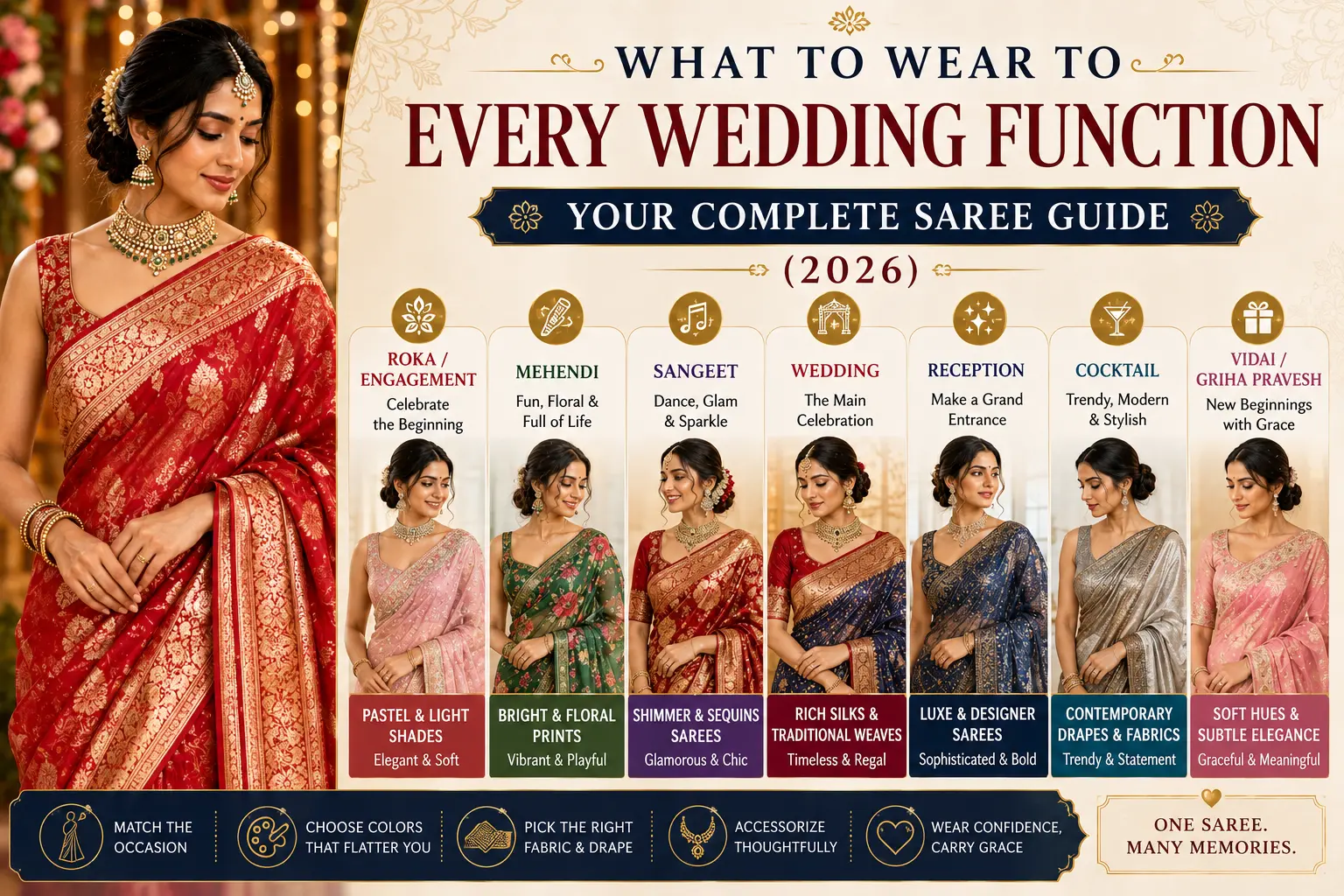
What to Wear to Every Wedding Function – Your Complete Saree Guide (2026)
An Indian wedding isn’t one event — it’s a week-long celebration where every function has its own mood, energy, and unspoken dress code. The saree you wear to a turmeric-splashed haldi ceremony should look and feel completely different from what you pick for a glittering reception night.
Yet most wedding saree guides treat “wedding” as a single occasion. The result? Women end up overdressed at the mehndi, uncomfortable at the haldi, or underdressed at the reception.
This guide breaks it down function by function — the right fabric, colour, draping style, and handloom picks for haldi, mehndi, sangeet, the wedding ceremony, and the reception. Whether you’re the bride, a bridesmaid, or a guest, use this as your wedding weekend wardrobe planner.
Haldi – Keep It Light, Bright & Stain-Proof
The haldi ceremony is a daytime ritual involving turmeric paste, laughter, and very real chances of your saree getting stained. This is not the function for expensive silk.
Best fabrics for haldi:
- Lightweight cotton handlooms are ideal. A Mangalagiri cotton saree in bright yellow or mustard is the perfect haldi pick — affordable, breathable, and easy to wash if turmeric gets on it.
- Cotton-silk blends and linen sarees also work well. They dry quickly and don’t absorb stains as deeply as pure silk.
- If you want a touch of shimmer, opt for a light Chanderi cotton-silk in a warm gold or sunshine yellow.
Best colours: Yellow (traditional), mustard, mango, warm orange, lime green.
Avoid: Pure silk, heavy zari work, white or pastel shades (turmeric stains are permanent on light fabrics).
Styling tip: Pair with floral jewellery (fresh or artificial), glass bangles, and comfortable flats. Keep the draping style simple — a classic Nivi drape or a pre-pleated saree works best for an active, outdoor ceremony.
Mehndi – Playful Prints, Vibrant Colours & Comfortable Drapes
The mehndi function is festive but relaxed — think music, henna artists, laughter, and lots of photos. Your saree should be vibrant and expressive, but light enough to let you move freely and show off your henna.
Best fabrics for mehndi:
- Printed cotton handlooms and Ikat cotton sarees bring the right mix of colour and comfort. The geometric Ikat patterns photograph beautifully and feel festive without being heavy.
- Chanderi sarees in playful colours like green, coral, or turquoise offer a semi-formal look with a lightweight drape — perfect for the mehndi’s daytime-to-evening energy.
- Ajrakh block-printed sarees in indigo and maroon tones make a stunning, artsy statement if you want a more bohemian, earthy aesthetic.
Best colours: Green (traditional for mehndi), coral, turquoise, magenta, multi-colour prints.
Avoid: Very heavy sarees or anything too formal — the mehndi is about fun, not grandeur.
Styling tip: Go bold with your blouse design — a contrast blouse, puff sleeves, or an embroidered crop-top blouse pairs beautifully with a lightweight printed saree. Stack bangles generously and keep makeup fresh and dewy.
Sangeet Night – Shimmer, Drama & Dance-Ready Drapes
The sangeet is the most high-energy function of the wedding weekend. There’s music, choreography, and a stage-like atmosphere. Your saree needs to look striking under event lighting while being comfortable enough to dance in.
Best fabrics for sangeet:
- Georgette and crepe sarees with sequin or mirror work drape fluidly and catch light beautifully on the dance floor.
- A lightweight Tussar silk saree with a metallic blouse offers a handloom-meets-glam combination that stands out without being costume-like.
- Organza sarees with embroidered borders work well for those who prefer a soft, editorial look over heavy shimmer.
Best colours: Jewel tones — emerald, royal blue, wine, deep purple, champagne gold. Metallics and ombre effects also work beautifully under stage lighting.
Avoid: Very stiff or heavy sarees that restrict movement. You’ll regret a 900-gram Kanchipuram on the dance floor.
Styling tip: Opt for a pre-draped or dhoti-style drape for maximum freedom of movement. Statement earrings and a sleek updo complete the sangeet look. Check our draping guide for contemporary drape ideas.
Wedding Ceremony – Traditional Silk & Heritage Handlooms
The wedding ceremony is where tradition takes centre stage. This is the function where heritage handloom sarees truly shine — and where investing in a premium silk makes the most sense.
Best fabrics for the wedding:
- Banarasi silk sarees are the undisputed classic. The rich brocade, heavy zari, and traditional motifs carry the gravitas a wedding ceremony demands. Use our Banarasi buying guide to select the right weight and zari quality.
- Paithani silk sarees are the top choice for Maharashtrian weddings and anyone who loves the iconic peacock pallu. Explore our top 10 Paithani picks for festive inspiration.
- Kanchipuram silk remains the gold standard for South Indian wedding ceremonies — heavy, opulent, and deeply traditional.
Best colours: Red (classic bridal), maroon, gold, deep pink, auspicious orange. For guests, opt for jewel tones like emerald or royal blue to complement the bride without competing.
Avoid: White, black, or very muted pastels — these can feel out of place at a traditional wedding ceremony.
Styling tip: Traditional temple jewellery, gold jhumkas, and a classic Nivi drape with a neatly pinned pallu create the perfect ceremonial look. Check our best traditional sarees for weddings and festivals for more curated picks.
Reception – Statement Sarees for the Grand Finale
The reception is the most glamorous function — think evening lighting, a dressed-up crowd, and a celebratory vibe. Your saree should make a statement while still feeling polished and elegant.
Best fabrics for reception:
- Designer sarees with sequin, beadwork, or metallic thread embroidery are reception favourites. Georgette and satin bases drape smoothly under evening light.
- If you prefer handloom over designer, a rich Maheshwari silk saree in a deep jewel-toned colour paired with a contemporary blouse makes a stunning, understated statement.
- The Aboli colour Paithani is a gorgeous, unconventional reception choice — the warm sunset shade looks breathtaking under golden lighting.
Best colours: Champagne, teal, wine, midnight blue, blush pink, black (yes, a well-styled black saree is a powerful reception statement), rose gold.
Avoid: Overly casual cotton or linen. The reception is the one function where you can’t be overdressed.
Styling tip: A statement blouse design elevates any reception saree — think deep backs, boat necks, or embellished cape sleeves. Pair with layered necklaces, a clutch, and heels for a polished finish.
Quick Function-Wise Saree Comparison Table
Use this table to plan your wedding weekend wardrobe at a glance:
| Function | Best Fabric | Best Colours | Drape Style | Avoid |
| Haldi | Cotton, Linen, Light Chanderi | Yellow, Mustard, Mango, Orange | Simple Nivi, Pre-draped | Pure silk, Heavy zari, White/pastels |
| Mehndi | Ikat cotton, Chanderi, Ajrakh prints | Green, Coral, Turquoise, Magenta | Open pallu, Butterfly drape | Heavy formal sarees, Monochrome |
| Sangeet | Georgette, Crepe, Tussar silk, Organza | Emerald, Wine, Royal blue, Gold | Pre-draped, Dhoti style | Stiff/heavy silk, Muted colours |
| Wedding | Banarasi silk, Paithani, Kanchipuram | Red, Maroon, Gold, Deep pink | Classic Nivi, Pinned pallu | White, Black, Casual cotton |
| Reception | Designer embroidered, Maheshwari silk, Satin | Wine, Teal, Champagne, Black | Modern drape, Lehenga style | Plain cotton, Linen, Under-styled |
Plan Your Wedding Wardrobe with Shashikala Sarees
At Shashikala Sarees, we offer handloom sarees for every wedding moment — from breathable Mangalagiri cottons for your haldi morning, to elegant Chanderi silks for mehndi evenings, to luxurious Banarasi and Paithani silks for the main ceremony. Every saree is sourced directly from artisan clusters with complete transparency on origin and fabric.
Plan your wedding weekend — one perfect saree at a time.
➤ Explore our wedding-ready handloom collection at ShashikalaSarees.com
FAQ’s
Q1: What colour saree should I wear for a haldi ceremony?
Yellow is the most traditional and popular colour for haldi. Mustard, warm orange, mango, and lime green also work well. Avoid white or pastel shades as turmeric stains are permanent on light fabrics. Choose a lightweight cotton or cotton-silk saree you are comfortable getting stained.
Q2: Can I wear a silk saree to mehndi?
A lightweight silk like Chanderi or Tussar works for mehndi, but avoid heavy Banarasi or Kanchipuram silks. Mehndi is a relaxed, playful function where comfort and vibrant colour matter more than formality. Printed cotton or Ikat handlooms are excellent choices.
Q3: What is the best saree for a sangeet night?
Choose a saree that looks striking under event lighting and allows you to dance comfortably. Georgette, crepe, or lightweight Tussar silk in jewel tones like emerald, wine, or royal blue are ideal. A pre-draped or dhoti-style drape gives you maximum freedom of movement on the dance floor.
Q4: Should wedding guests avoid wearing red sarees?
In many Indian traditions, red is reserved for the bride. As a guest, it is considerate to choose jewel tones like emerald, royal blue, teal, or deep purple instead. However, this varies by region and family preference — if you are unsure, ask the bride or her family.
Q5: What saree should I wear to a wedding reception?
The reception is the most glamorous function. Choose a designer or embroidered saree in champagne, wine, teal, midnight blue, or black. Georgette, satin, or Maheshwari silk bases work beautifully. Pair with statement jewellery, heels, and a contemporary blouse design for a polished evening look.
EXTERNAL LINKS TO ADD (Open in New Tab)
- India Handloom Brand — https://handlooms.nic.in
- Vogue India Wedding Fashion — https://www.vogue.in/fashion/weddings


About author



Add comment