
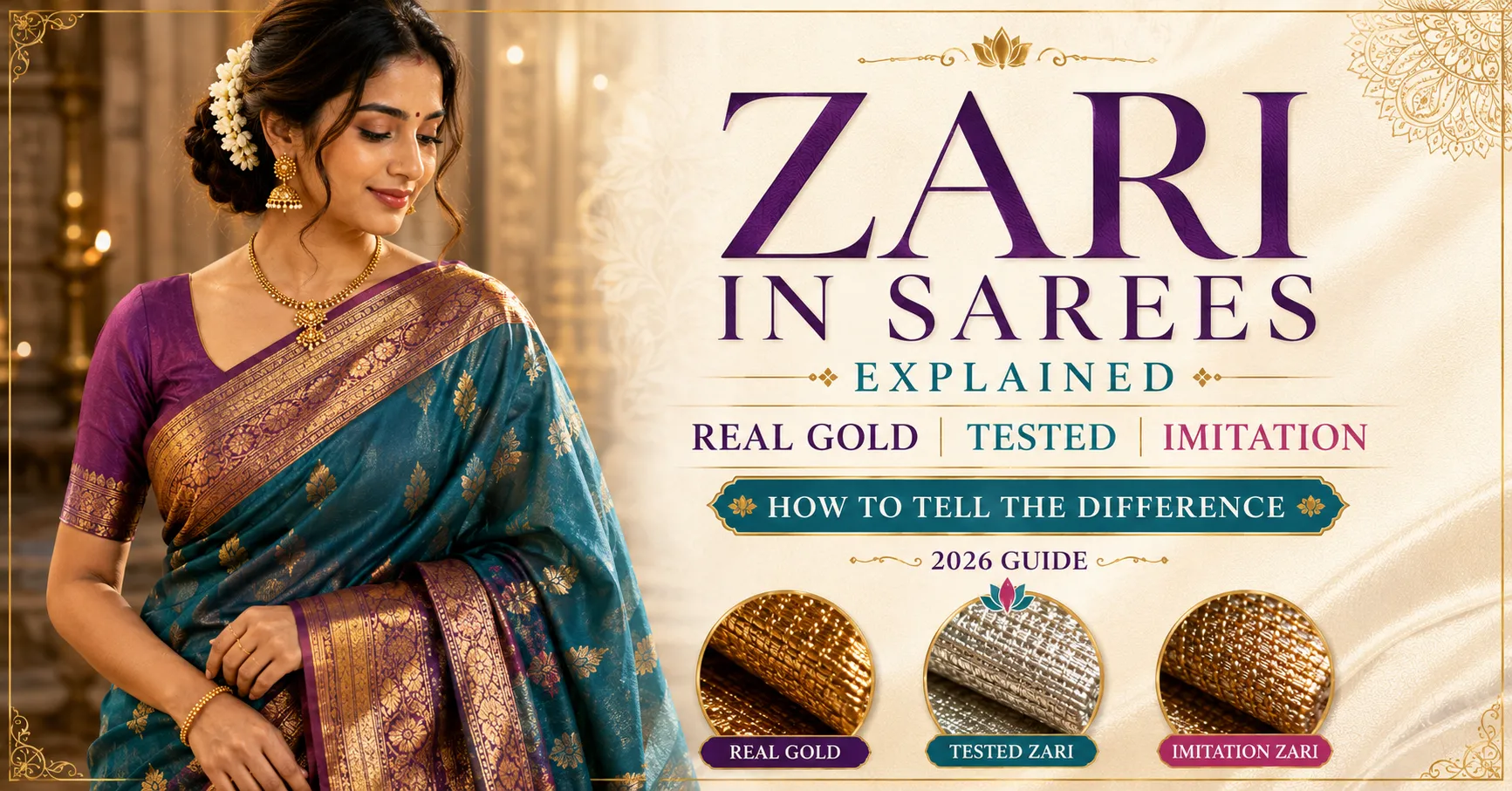
Zari in Sarees Explained: Real Gold vs Tested vs Imitation – How to Tell the Difference
That rich golden shimmer running through the border and pallu of a Banarasi silk saree or a Paithani saree? That’s zari — the metallic thread that transforms handloom silk into something luminous.
But here’s what most buyers don’t realise: not all zari is the same. The difference between real zari and imitation zari can mean a price gap of ₹5,000 to ₹50,000+ on the same saree design. Yet most sellers never explain what type of zari their saree contains.
This guide breaks down the types of zari used in Indian sarees, how each affects price and durability, and simple tests you can do at home to check zari quality before you buy.
What Is Zari? The Metallic Thread Behind Saree Luxury
Zari is a metallic thread woven into fabric to create shimmering borders, motifs, and pallu designs. The word comes from the Persian ‘zar’ meaning gold.
Traditionally, zari was made by drawing pure silver wire into extremely thin filaments, electroplating them with 24-carat gold, and then wrapping this metallic thread around a silk core. This process — perfected over centuries in weaving centres like Varanasi and Surat — is what gives heritage sarees their warm, deep, unmistakable glow.
Today, however, the market offers multiple grades of zari at vastly different price points. Understanding these grades is the single most important thing you can learn as a saree buyer.
Types of Zari – Pure Gold, Tested, Half-Fine & Imitation
Here are the main types of zari you’ll encounter when shopping for silk sarees:
-
Pure Zari (Real Zari / Sona Zari)
Made from pure silver wire electroplated with 24-carat gold, wrapped around a silk core. This is the most expensive and prestigious grade. Pure zari has a soft, warm, deep glow that is unmistakable — it looks rich without being flashy. It does not tarnish with age; instead, it develops a graceful patina that makes vintage sarees even more beautiful. Found in premium Banarasi, Kanchipuram, and Paithani sarees.
-
Tested Zari
Uses a copper wire base instead of silver, electroplated with a thin gold layer. The term ‘tested’ refers to the fact that it passes a basic gold-presence test, but the metal content is significantly lower than pure zari. Tested zari offers a good visual shimmer at a much lower cost, but it can darken or tarnish over several years, especially if stored improperly.
-
Half-Fine Zari
Copper wire is silver-gilded (coated with a thin layer of silver) and then electroplated with gold. Half-fine zari closely mimics the appearance of pure zari to the untrained eye and is the most widely used grade in mid-range handloom sarees. It offers a strong balance between visual appeal and affordability.
-
Imitation Zari (Plastic / Lurex Zari)
Made from polyester or plastic film coated with metallic paint. Also sold under trade names like Rexor and Lurex. Imitation zari is the cheapest option and comes in a variety of colours beyond traditional gold and silver. However, it has a harsh, glittery, flat sparkle that lacks the depth of real metal. It can stiffen fabric, crack with age, and has no resale or heirloom value.
Zari Types at a Glance – Quick Comparison Table
| Zari Type | Metal Composition | Shine Quality | Durability | Price Impact on Saree |
| Pure Zari | Silver + 24k gold + silk core | Warm, deep, soft glow | Decades (heirloom quality) | Highest (₹10,000–₹1,00,000+) |
| Tested Zari | Copper + gold electroplating | Good shimmer, slightly bright | 5–15 years (may darken) | Mid-high (₹5,000–₹25,000) |
| Half-Fine | Copper + silver gilding + gold | Close to pure zari | 8–20 years (with care) | Mid-range (₹3,000–₹15,000) |
| Imitation | Plastic / polyester film | Harsh, flat, glittery | 2–5 years (cracks/fades) | Lowest (₹500–₹3,000) |
For a broader pricing breakdown across all handloom types, see our handloom saree price guide.
How to Test Zari Quality at Home (4 Simple Methods)
You don’t need a lab to check zari quality. Here are four practical tests you can do before or after purchasing:
- The Touch Test: Pull a small zari thread from the saree’s inner hem. Real zari (pure or tested) feels soft and pliable between your fingers. Imitation zari feels stiff, plasticky, or rough. If the thread resists bending naturally, it’s likely synthetic.
- The Rub Test: Gently rub the zari thread between your thumb and forefinger for 15–20 seconds. If the gold colour fades to reveal a red, green, or plastic base underneath, it is imitation zari. Real zari retains its metallic surface even after rubbing.
- The Burn Test (Caution): Take a small thread from the hem and burn it carefully. Real zari (with a silk core) will burn to ash and emit a smell of burning metal and protein. Imitation zari with a polyester core will melt like plastic and give off a chemical odour. Only do this with expert guidance on an unused thread.
- The Magnet Test: Place a small fridge magnet over the zari-heavy areas of the saree (borders, pallu). Real gold and silver are non-magnetic. If the magnet sticks or shows any attraction, the zari contains cheap ferrous metals — a clear sign of low-quality imitation.
For a complete authenticity checklist covering fabric, selvedge, and weave — not just zari — read our detailed guide on how to identify genuine handloom sarees.
Zari by Saree Type – What to Expect in Banarasi, Paithani & Kanchipuram
Different handloom traditions use zari differently. Here’s what to look for in the saree types Shashikala offers:
- Banarasi Sarees: Zari is the soul of a Banarasi. Premium pieces use pure or tested zari in intricate brocade patterns across the body, border, and pallu. Lightweight Banarasi sarees may use half-fine zari for affordability. Use our Banarasi buying guide to understand how zari grade affects your selection.
- Paithani Sarees: Paithani is defined by its gold zari pallu with handwoven peacock or lotus motifs. Authentic Paithani uses real or tested zari on the pallu and border, while the body is typically plain silk. The Aboli colour Paithani is especially known for how beautifully gold zari contrasts with its warm sunset body.
- Chanderi & Maheshwari: These lighter sarees use delicate zari accents in borders and butis rather than heavy all-over zari work. Most Chanderi and Maheshwari sarees in the mid-range use half-fine or tested zari, which is appropriate for their lightweight character.
- Kanchipuram: South Indian Kanchipuram sarees are categorised by zari weight — commonly listed as 2gm, 4gm, or 6gm gold zari, referring to gold content per saree. The higher the gram weight, the richer the lustre and the higher the price.
How to Protect Your Zari from Tarnishing
Even real zari can darken if stored poorly. Here are key care rules:
- Store zari sarees wrapped in soft muslin cloth — never in plastic covers, which trap moisture and accelerate tarnishing.
- Keep silica gel packets near stored sarees to absorb excess humidity.
- Refold every 3–4 months to prevent permanent crease lines on zari work.
- Avoid direct sunlight exposure during storage — both silk and gold can fade over time.
- Dry clean only. Never hand-wash or use detergent on zari sarees.
For a complete storage and maintenance guide across all handloom types, read our handloom saree care and storage guide.
Shop Real Zari Sarees with Full Transparency at Shashikala
At Shashikala Sarees, we believe you deserve to know exactly what you’re paying for. Every saree in our collection comes with complete transparency on zari type, fabric composition, and weaving origin. We work directly with artisan clusters and weaver cooperatives to ensure authenticity at every step.
Whether you’re investing in a pure zari Banarasi for a wedding, a tested zari Paithani for a festive celebration, or a half-fine zari Chanderi for an elegant evening — we’ve got you covered.
➤ Explore our authentic zari saree collection at ShashikalaSarees.com
FAQ’s
Q1: What is real zari made of?
Real zari (also called pure zari or sona zari) is made from pure silver wire electroplated with 24-carat gold, wrapped around a silk core thread. This is the most precious and durable form of zari used in Indian handloom sarees like Banarasi, Kanchipuram, and Paithani.
Q2: What is the difference between tested zari and pure zari?
Pure zari uses a silver base with gold plating, while tested zari uses a copper base with a thinner gold electroplating. Tested zari passes a basic gold-presence test but contains significantly less precious metal. It is more affordable but may darken or tarnish over 5–15 years, unlike pure zari which retains its glow for decades.
Q3: How can I check if my saree has real zari at home?
You can use four simple tests: the touch test (real zari feels soft, imitation feels stiff), the rub test (imitation fades to reveal a coloured base), the burn test (real zari’s silk core burns to ash while imitation melts like plastic), and the magnet test (real gold and silver are non-magnetic). Always test on an inconspicuous thread from the inner hem.
Q4: Does zari type affect saree price?
Yes, dramatically. The same Banarasi design can range from ₹3,000 with imitation zari to over ₹50,000 with pure gold zari. Zari grade is the single biggest price variable in silk sarees. Always ask the seller to specify the zari type before purchasing.
Q5: How do I prevent zari from tarnishing?
Store zari sarees wrapped in muslin cloth (never plastic), use silica gel to absorb moisture, refold every 3–4 months, keep away from direct sunlight, and always dry clean. With proper storage, even tested zari sarees can maintain their lustre for 15–20 years.
- Bureau of Indian Standards — Zari Classification — https://www.bis.gov.in
- Ministry of Textiles — Handloom Mark — https://handlooms.nic.in


About author


Add comment